
Payroll Impact Explained for UAE Minimum Wage
The introduction of the UAE minimum wage for Emirati employees from 1 January 2026 requires employers to closely review payroll structures, salary components, and system alignment.
While the minimum wage figure is clear, its payroll implications depend on how salaries are structured, recorded, and reported within MoHRE systems. This article explains what HR and payroll teams should review to remain compliant.
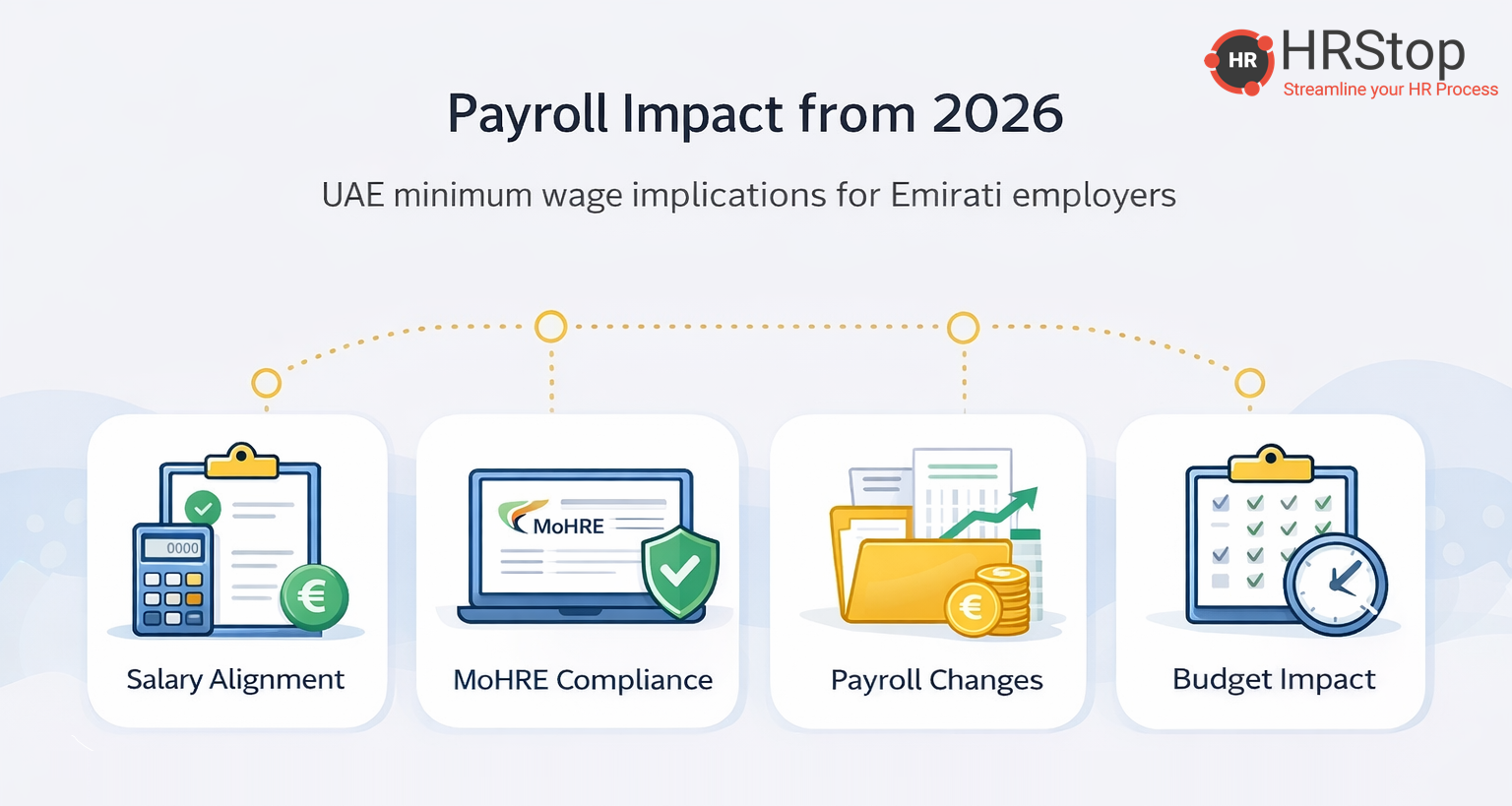
Understanding the Minimum Wage Threshold
The minimum wage of AED 6,000 per month applies to Emirati employees working in the private sector.
Employers must ensure that:
- Salary figures reflected in MoHRE records meet the threshold
- Payroll data aligns with employment contracts
- Reported wages are consistent across systems
Any discrepancy between internal payroll and official records can create compliance risks during permit renewals or audits.
Basic Salary and Allowances
Payroll teams should carefully review how salary components are structured.
Key considerations include:
- Whether the minimum wage requirement applies to total salary or specific components
- How allowances are reflected in MoHRE filings
- Consistency between payslips, contracts, and regulatory records
Employers should avoid assuming that existing allowance structures automatically satisfy the requirement without verification.
Impact on Existing Payroll Structures
For organisations employing Emiratis below the revised threshold, payroll adjustments may be required.
This may involve:
- Revising salary components
- Rebalancing fixed and variable pay
- Updating payroll configurations
These changes should be implemented in a controlled manner to ensure compliance without disrupting payroll cycles.
Payroll System Alignment
Payroll systems should be capable of:
- Flagging Emirati salaries below the minimum threshold
- Tracking salary changes during the transition period
- Maintaining historical records for audit purposes
Manual payroll tracking increases the risk of errors, especially where multiple entities or locations are involved.
Budgeting and Cost Planning
The revised minimum wage may impact:
- Workforce budgets
- Emiratisation cost planning
- Long-term hiring strategies
HR and finance teams should jointly assess the financial impact early to avoid last-minute adjustments closer to enforcement timelines.
Payroll Compliance Risks
Common payroll-related risks include:
- Mismatch between payroll data and MoHRE records
- Inconsistent salary reporting across systems
- Delayed updates during permit renewals
Such gaps can lead to blocked permits or compliance flags within MoHRE systems.
Related context is explained further in Work Permits and Renewals and Penalties and Risks
HR Checklist for Payroll Alignment
- Identify all Emirati employees on payroll
- Review current salary structures against the AED 6,000 threshold
- Validate payroll data against MoHRE records
- Update payroll systems and configurations where required
- Coordinate payroll changes with permit renewal timelines
FAQs
Does the minimum wage apply to total salary or basic salary
Employers should align salary structures based on MoHRE guidance and ensure reported wages meet the required threshold.
Do payroll changes apply to existing employees
Yes. Payroll alignment may be required for existing Emirati employees during permit renewals or contract modifications.
What happens if payroll data does not match MoHRE records
Inconsistencies can lead to compliance issues, including delays or rejection of work permit transactions.
Should payroll changes be implemented immediately
Employers should use the transition period to plan and implement changes in a controlled and compliant manner.
Related Articles
- UAE Minimum Wage 2026
- Who Does It Apply To
- Work Permits and Renewals
- Emiratisation Impact
- Penalties and Risks
- HR Systems Readiness
🎯 HRStop helps organisations maintain accurate payroll and employee data by centralising records across entities and locations. This enables HR teams to track compliance, reduce manual checks, and remain audit-ready as wage regulations evolve. Request a Free HR Process Audit
# Compliance
# Payroll
# Payroll Compliance
#2026
#UAE Minimum Wage
#MoHRE Compliance
#UAE Labour Law
#Emiratisation
Rashmi Agarwal
Wednesday, January 21, 2026
Share post:
Become part of our team
- Full Stack Developer
- Business Development Executive
- Technical Content Writer
- HR Business Partner
- Customer Happiness Executive
- Marketing Executive
One stop solution for all
Hire to Retire needs
HRStop is a complete Hire to Retire HR platform that accelerates the success of your business processes.