
Emiratisation Impact
The revision of the minimum wage for Emirati employees from 1 January 2026 has a direct impact on how organisations plan, track, and manage their Emiratisation obligations.
While the minimum wage is a payroll requirement, its implications extend into workforce planning, localisation metrics, and overall compliance standing with MoHRE.
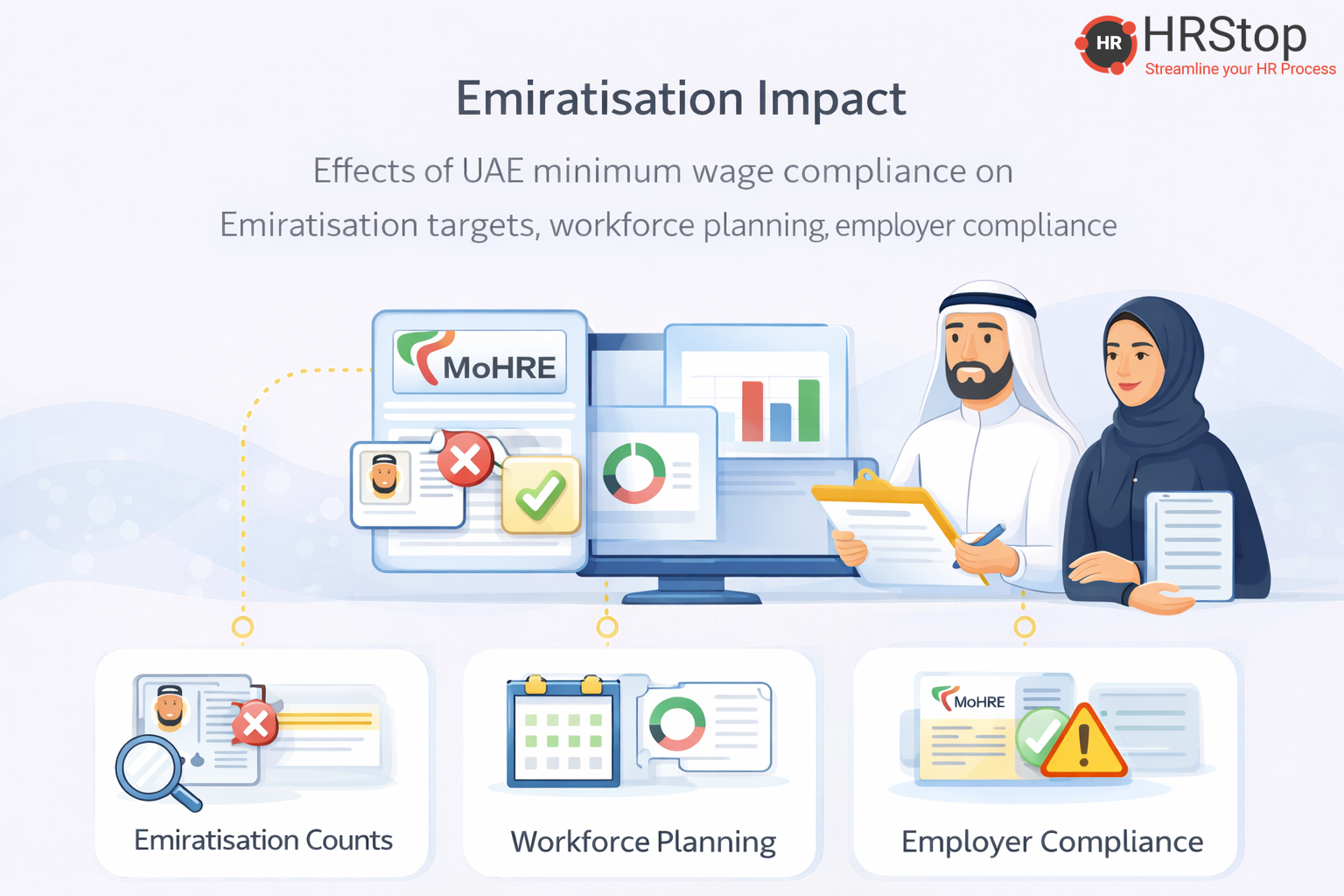
Link Between Minimum Wage and Emiratisation
Emiratisation calculations are closely tied to:
- Valid work permits
- Active employment status
- Salary compliance reflected in MoHRE systems
If an Emirati employee’s salary does not meet the minimum wage threshold, that employee may not be countedtowards Emiratisation targets until the issue is corrected.
Impact on Emiratisation Quotas
Salary non-compliance can affect:
- Whether an Emirati employee is included in localisation ratios
- Employer Emiratisation scores
- Eligibility for incentives or benefits linked to Emiratisation performance
This makes wage compliance a foundational requirement, not a separate payroll task.
Workforce Planning Considerations
Employers may need to reassess:
- Cost assumptions for Emirati roles
- Hiring timelines and workforce mix
- Long-term sustainability of localisation plans
Treating Emiratisation as a short-term hiring activity without aligning compensation structures can lead to repeated compliance gaps.
Effect on Hiring Strategy
The revised minimum wage encourages organisations to:
- Plan Emirati hiring with clearer role definitions
- Align job design with long-term retention
- Budget accurately for Emirati talent
This shift supports more meaningful integration of Emirati employees into the workforce.
Monitoring and Reporting Challenges
Common challenges faced by HR teams include:
- Tracking salary compliance alongside localisation data
- Managing multiple entities or locations
- Identifying risks before they affect Emiratisation counts
Without structured systems, these issues often surface only during audits or permit renewals.
HR Checklist for Emiratisation Alignment
- Review Emirati employee salary data against the minimum wage
- Validate Emiratisation counts in MoHRE systems
- Align workforce planning with revised cost structures
- Monitor changes during permit renewals and modifications
- Document compliance actions for audit readiness
FAQs
Does salary non-compliance affect Emiratisation counts
Yes. Emirati employees with non-compliant salaries may be excluded from Emiratisation calculations.
Can Emiratisation targets be met without salary alignment
No. Salary compliance is a prerequisite for valid localisation reporting.
Does this impact existing Emirati employees
Yes. Existing employees must also meet the minimum wage requirement to be counted.
How can employers monitor Emiratisation risks early
By regularly reviewing salary, permit, and localisation data together rather than in isolation.
Related Articles
- UAE Minimum Wage 2026
- Who Does It Apply To
- Payroll Impact Explained for UAE Minimum Wage
- Work Permits and Renewals
- Penalties and Risks
- HR Systems Readiness
🎯 HRStop helps organisations manage Emiratisation data, salary compliance, and workforce planning from a single platform. This enables HR teams to maintain visibility across employee records, reduce manual tracking, and stay aligned with localisation requirements. Request a Free HR Process Audit
# Compliance
# Payroll
# Payroll Compliance
#2026
#UAE Minimum Wage
#MoHRE Compliance
#UAE Labour Law
#Emiratisation
Rashmi Agarwal
Wednesday, January 21, 2026
Share post:
Become part of our team
- Full Stack Developer
- Business Development Executive
- Technical Content Writer
- HR Business Partner
- Customer Happiness Executive
- Marketing Executive
One stop solution for all
Hire to Retire needs
HRStop is a complete Hire to Retire HR platform that accelerates the success of your business processes.