
HR Systems Readiness for UAE Minimum Wage
The introduction of the UAE minimum wage for Emirati employees places a strong emphasis on data accuracy, system alignment, and proactive compliance tracking.
As regulatory requirements become more interconnected, organisations relying on manual tracking or fragmented systems face higher compliance risk. HR systems now play a critical role in ensuring ongoing readiness.
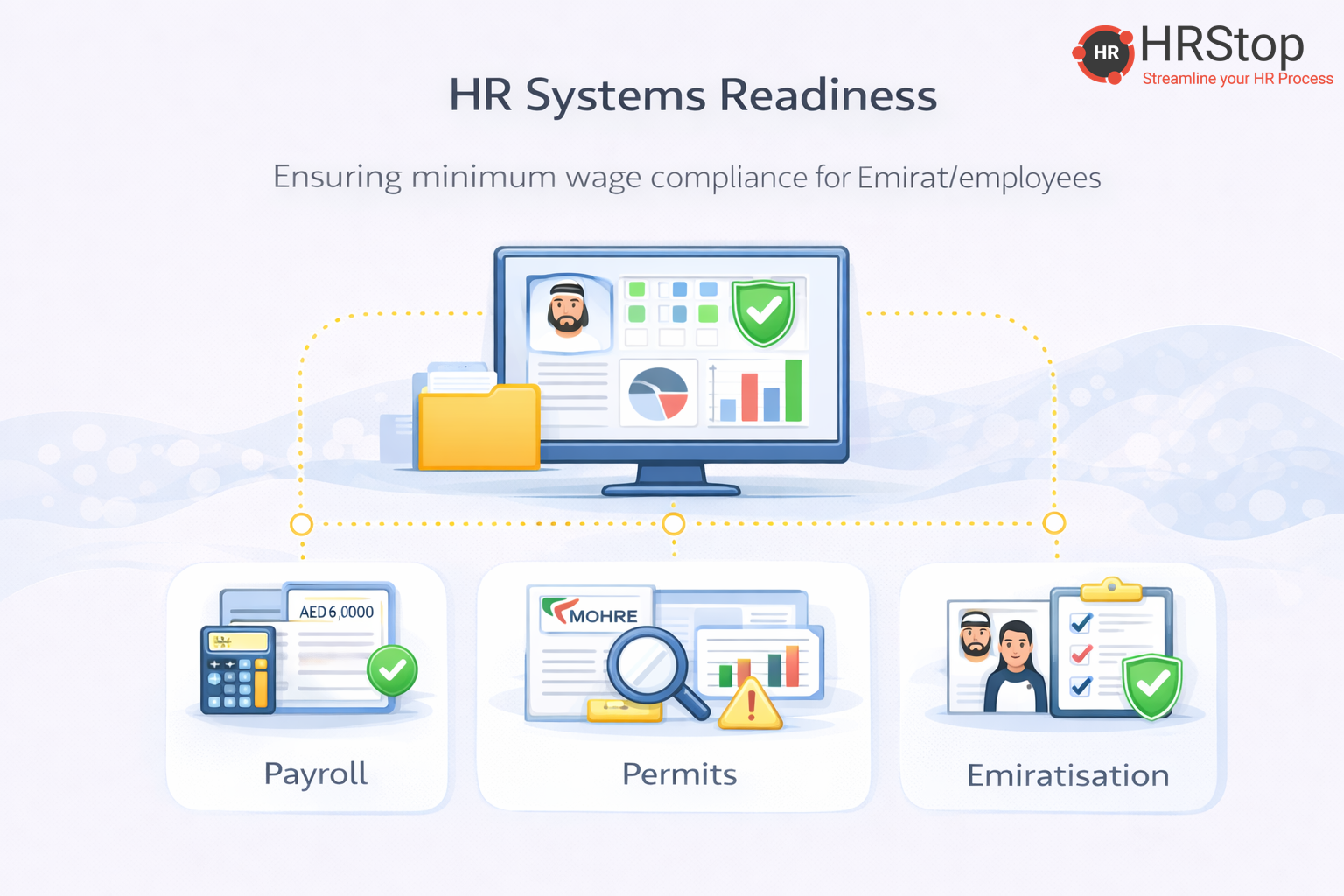
Why HR Systems Matter for Compliance
Minimum wage compliance is no longer limited to payroll updates.
It requires HR systems to accurately track:
- Emirati employee records
- Salary structures
- Work permit status
- Emiratisation calculations
Any inconsistency across these areas can lead to compliance gaps during audits, renewals, or inspections.
Key Data Points HR Systems Must Track
To remain compliant, HR systems should maintain visibility into:
- Salary values recorded against Emirati employees
- Alignment between payroll data and MoHRE records
- Permit issuance, renewal, and modification timelines
- Emiratisation eligibility and localisation counts
When this data is scattered across spreadsheets or disconnected tools, risks increase.
Risks of Manual or Fragmented Tracking
Organisations relying on manual processes often face:
- Delayed identification of salary gaps
- Missed permit renewal deadlines
- Inconsistent reporting across entities or locations
- Reactive corrections triggered by MoHRE rejections
These risks tend to surface at critical moments, such as permit renewals or compliance reviews.
System Alignment Across HR, Payroll, and Compliance
HR readiness depends on system consistency.
This means:
- Payroll data matches contract and permit records
- Salary changes reflect across all systems
- Compliance actions are documented and traceable
Without alignment, even compliant organisations may appear non-compliant during regulatory checks.
Preparing for Ongoing Regulatory Changes
The minimum wage update is part of a broader compliance landscape.
HR systems should be flexible enough to:
- Adapt to future wage revisions
- Support evolving Emiratisation requirements
- Provide audit-ready records at short notice
Building system readiness now reduces long-term compliance effort.
HR Checklist for Systems Readiness
- Centralise Emirati employee records
- Validate salary data across HR and payroll systems
- Track work permit timelines proactively
- Monitor Emiratisation eligibility in real time
- Maintain documentation for audits and inspections
FAQs
Do HR systems need to track minimum wage compliance continuously
Yes. Ongoing tracking is required to ensure compliance during renewals, modifications, and audits.
Can payroll systems alone handle compliance requirements
No. Payroll systems must be aligned with HR and permit data to ensure complete compliance visibility.
What happens if systems are not aligned
Misalignment can lead to rejected permits, compliance flags, or inaccurate Emiratisation reporting.
Is system readiness a one-time exercise
No. It requires continuous monitoring as regulations and workforce data change.
🎯 HRStop supports HR teams by bringing employee data, salary alignment, work permits, and Emiratisation tracking into a single system. This enables organisations to move from reactive compliance to structured, ongoing readiness. Request a Free HR Process Audit
# Compliance
# Payroll
# Payroll Compliance
#2026
#UAE Minimum Wage
#MoHRE Compliance
#UAE Labour Law
#Emiratisation
Rashmi Agarwal
Wednesday, January 21, 2026
Share post:
Become part of our team
- Full Stack Developer
- Business Development Executive
- Technical Content Writer
- HR Business Partner
- Customer Happiness Executive
- Marketing Executive
One stop solution for all
Hire to Retire needs
HRStop is a complete Hire to Retire HR platform that accelerates the success of your business processes.