
Budget 2026 Employer Impact
Introduction
Union Budget 2026 introduces several policy and taxation changes that directly affect employers across India. Beyond fiscal announcements, the budget influences how organisations manage payroll, compliance, workforce planning, and HR operations.
This article focuses on the employer-side impact of Budget 2026 and highlights what business leaders and HR teams should evaluate as they prepare for the new financial year.
Key Employer-Focused Changes in Budget 2026
- Policy measures aimed at simplifying compliance
- Income tax-related changes affecting payroll administration
- Continued emphasis on digital governance and reporting
- Signals for long-term workforce and cost planning
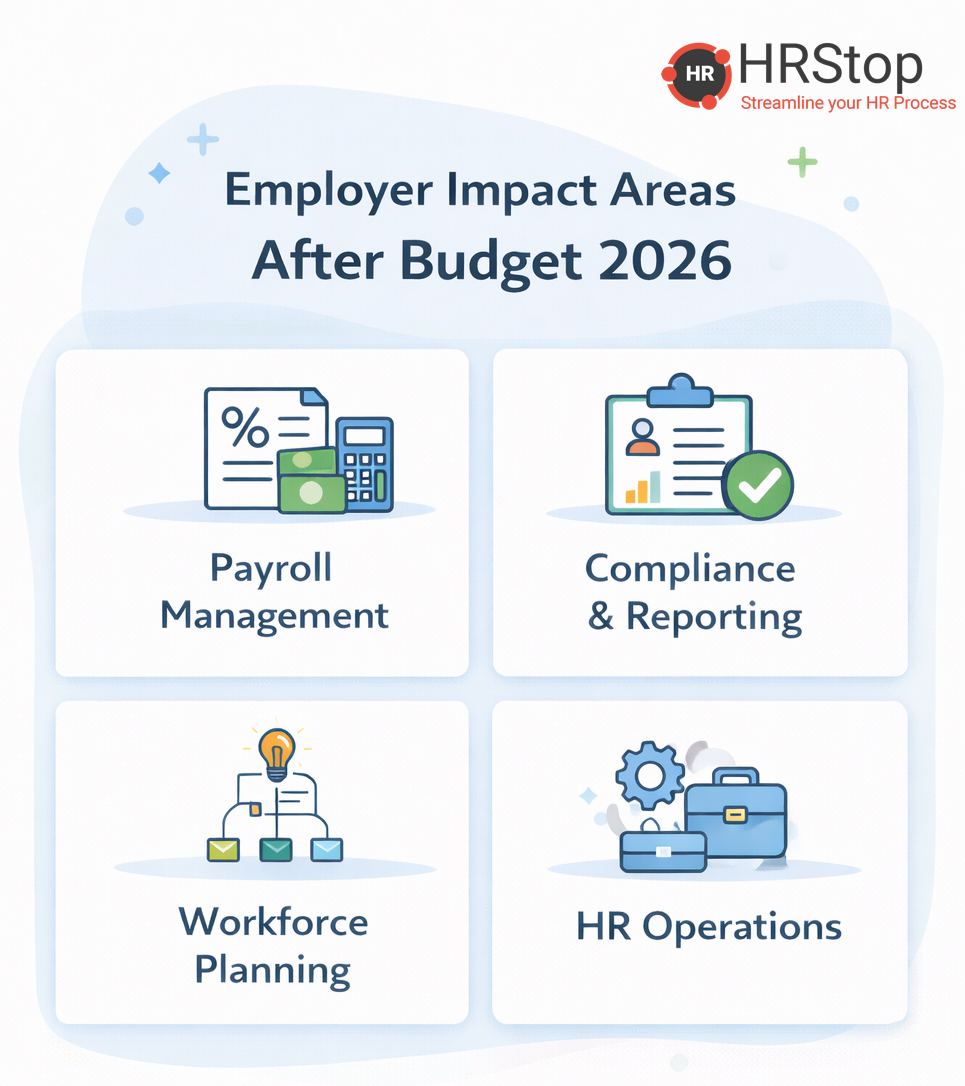
How Budget 2026 Impacts Employers
Payroll and Cost Management
Income tax changes and policy updates introduced in Budget 2026 require employers to reassess payroll structures and cost planning. Even when changes are primarily employee-facing, employers carry the responsibility of accurate calculation, deduction, and reporting.
Budget 2026 reinforces the need for reliable payroll systems that can adapt quickly to regulatory changes.
Compliance and Reporting Expectations
The budget continues the government’s direction towards simplified and digital-first compliance. Employers are expected to maintain accurate records, follow updated reporting timelines, and ensure that payroll and tax filings remain error-free.
This makes compliance readiness a critical focus area for HR and finance teams.
Workforce Planning and HR Strategy
Budget 2026 also sends broader signals around employment generation, skilling, and workforce participation. Employers should view these announcements as inputs for long-term workforce planning rather than one-time regulatory updates.
For an overview of the broader budget context, refer to Union Budget 2026 Overview.
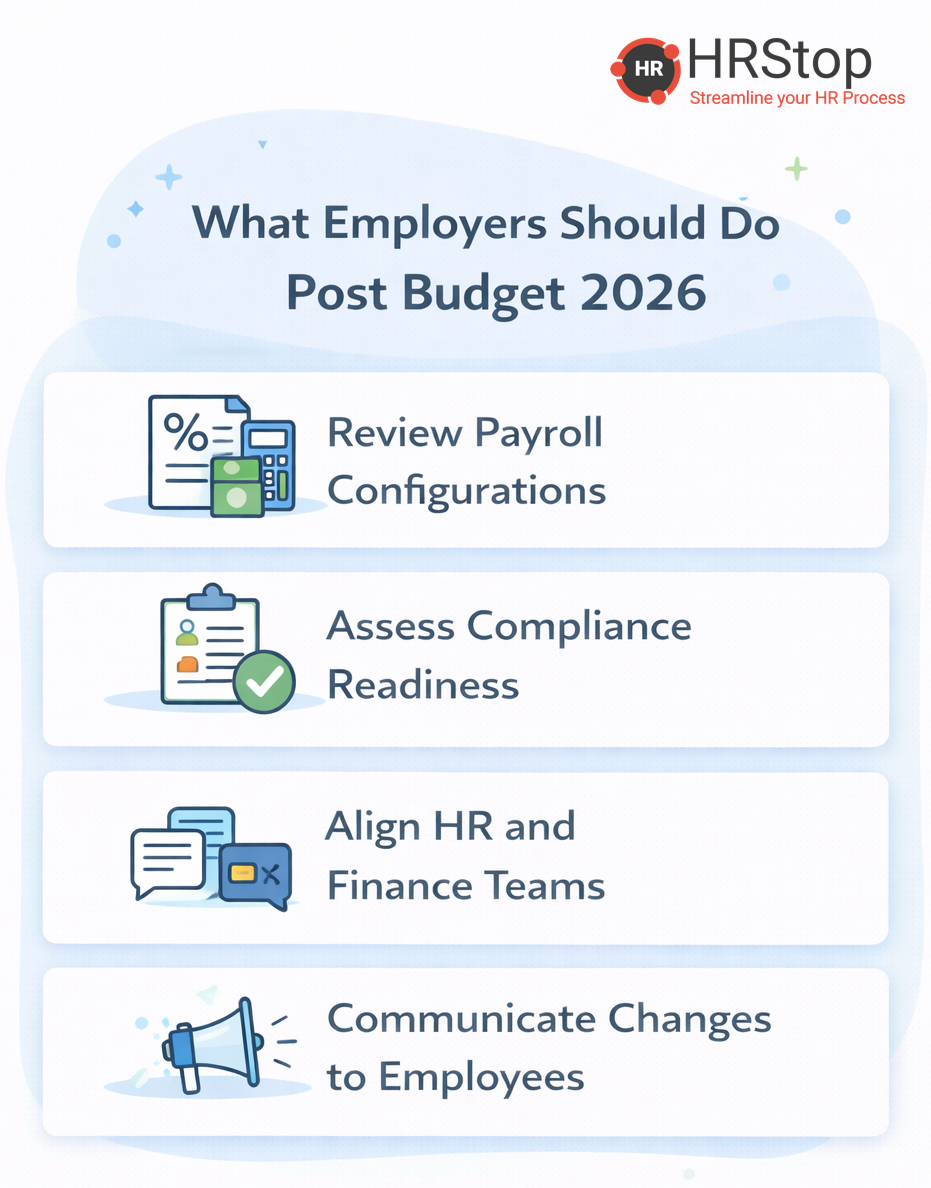
What Employers Should Prioritise Post Budget 2026
- Review payroll configurations and tax logic
- Assess compliance readiness for the new financial year
- Strengthen coordination between HR, payroll, and finance teams
- Prepare internal communication for employees
- Evaluate whether existing HR systems can scale with regulatory change
Why Employer Preparedness Matters
Employers play a central role in translating policy changes into operational reality. Delays or gaps in payroll updates and compliance processes can lead to employee dissatisfaction, compliance risks, and operational inefficiencies.
Budget 2026 reinforces the importance of proactive planning and automation in HR operations.
How HRStop Helps Employers Stay Prepared
HRStop enables employers to manage payroll, statutory compliance, and workforce processes through automated workflows and digital reporting. This helps organisations respond quickly to budget-related changes while maintaining accuracy and transparency.
🚀 Unsure if your payroll and compliance processes are ready for Budget 2026 changes?Request a Free Employer Compliance Readiness Check
Conclusion
Budget 2026 highlights the growing responsibility of employers in managing payroll accuracy, compliance, and workforce readiness. Organisations that proactively review their systems and processes will be better positioned to manage regulatory change and support business continuity.
Frequently Asked Questions
Does Budget 2026 require employers to make immediate changes
Some changes may require updates before the start of the new financial year, particularly in payroll and tax processes. Employers should review announcements early to avoid last-minute adjustments.
Are employers responsible for implementing income tax changes
Yes. Employers are responsible for applying income tax rules correctly through payroll systems and ensuring accurate deductions and reporting.
Does Budget 2026 increase compliance complexity for employers
While the intent is simplification, compliance expectations remain high. Digital readiness and process accuracy are increasingly important for employers.
How does Budget 2026 affect long-term workforce planning
Policy signals around employment and skilling can influence hiring strategies, workforce structure, and HR investments over time.
How can employers reduce risks related to budget changes
Using automated payroll and compliance systems, along with proactive planning and communication, can significantly reduce operational and compliance risks.
Rashmi Agarwal
Wednesday, February 04, 2026
Share post:
Become part of our team
- Full Stack Developer
- Business Development Executive
- Technical Content Writer
- HR Business Partner
- Customer Happiness Executive
- Marketing Executive
One stop solution for all
Hire to Retire needs
HRStop is a complete Hire to Retire HR platform that accelerates the success of your business processes.