
Budget 2026 for SMEs
Introduction
Small and medium enterprises play a critical role in India’s economic growth, employment generation, and innovation ecosystem. Union Budget 2026 includes several measures that directly and indirectly influence how SMEs manage costs, compliance, workforce planning, and long-term growth.
This article breaks down what Budget 2026 means specifically for SMEs and how business owners and HR teams can prepare for the changes ahead.
Why Budget 2026 Matters for SMEs
- SMEs operate with limited margins and lean teams
- Compliance and payroll complexity affects SMEs more acutely
- Policy clarity and simplification directly impact business continuity
- Digital adoption and automation are becoming essential, not optional
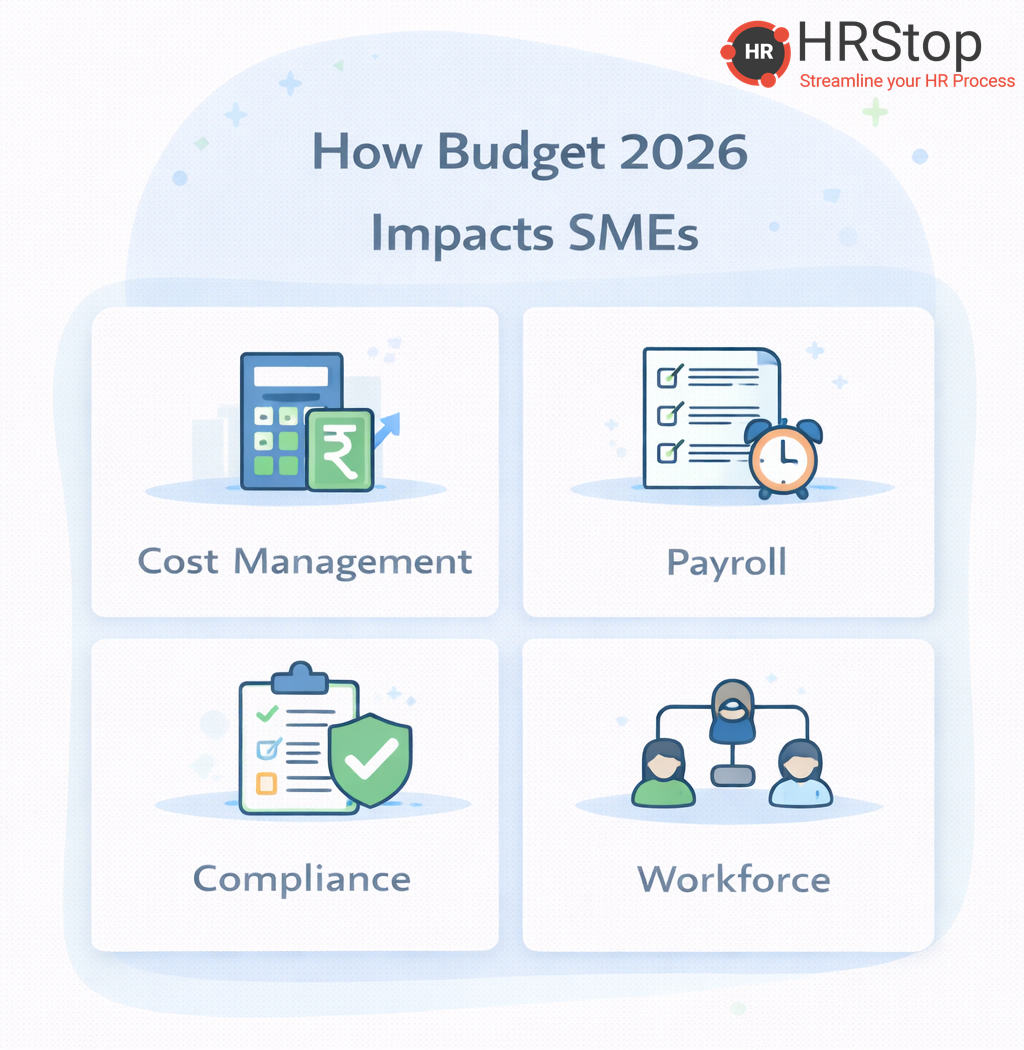
Key Budget 2026 Signals for SMEs
Focus on Ease of Compliance
Budget 2026 reinforces the government’s intent to simplify regulatory processes. For SMEs, this is an important step toward reducing administrative burden and enabling business owners to focus more on growth than paperwork.
However, simplification still requires accurate implementation at the payroll and HR level.
Cost Management and Financial Planning
Changes related to taxation and compliance influence how SMEs manage operational costs. Even small payroll or compliance inefficiencies can have a disproportionate impact on SME finances.
Budget 2026 encourages SMEs to adopt structured systems that support predictable and transparent cost management.
Impact on SME Workforce and Payroll
Payroll Accuracy and Timely Processing
SMEs are responsible for applying income tax rules correctly for employees, even if they do not have large payroll teams. Budget 2026 highlights the importance of accurate payroll processing to avoid errors, penalties, or employee dissatisfaction.
Compliance Readiness for Small Teams
Unlike large enterprises, SMEs often rely on smaller HR or finance teams. This makes automation and system-driven compliance especially important to reduce dependency on manual processes.
For broader budget context, refer to Union Budget 2026 Overview .
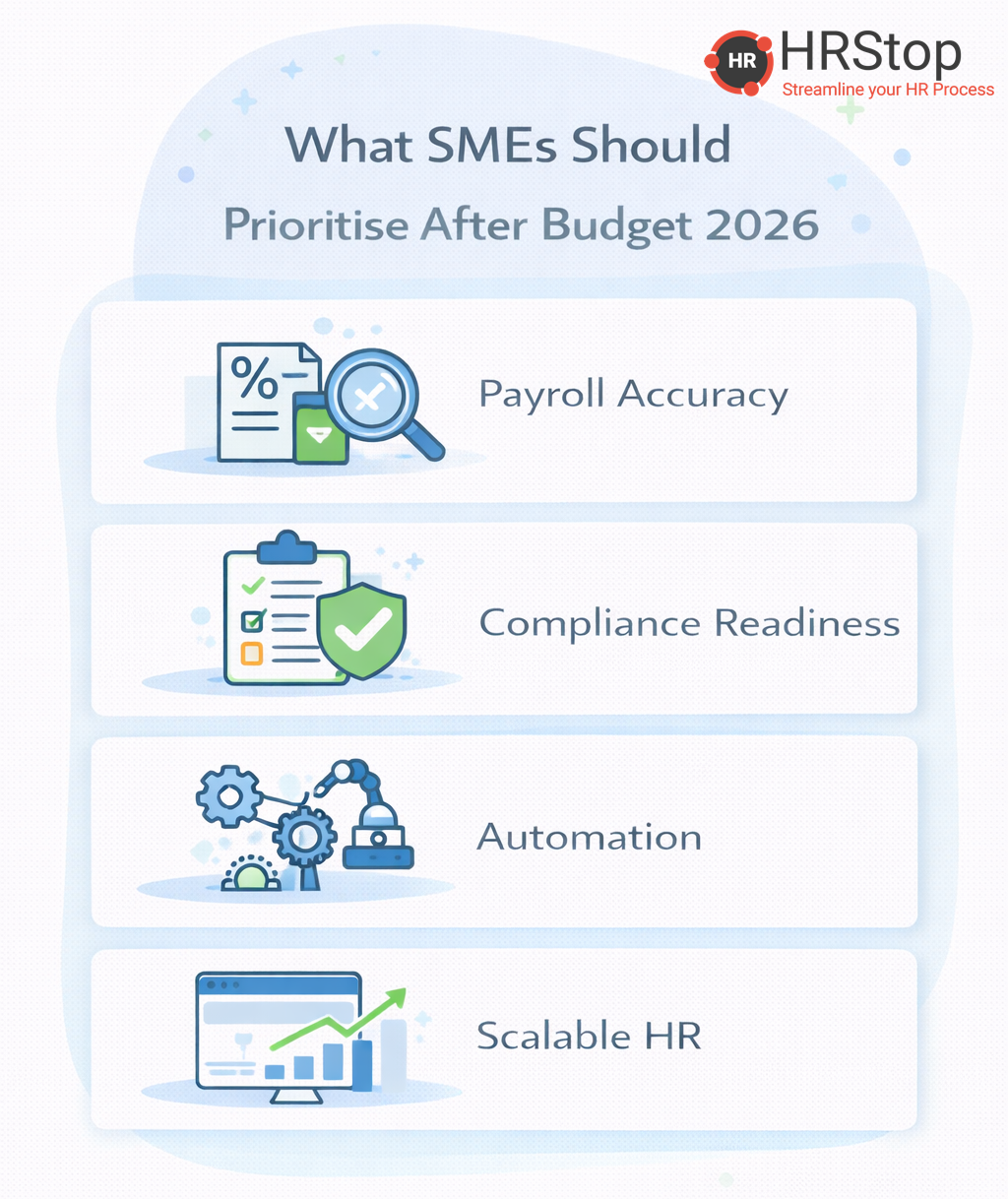
What SMEs Should Prioritise After Budget 2026
- Review payroll and tax configurations
- Ensure statutory compliance processes are up to date
- Reduce manual HR and payroll tasks
- Improve visibility into employee and compliance data
- Adopt scalable HR and payroll technology
Why Technology Matters More for SMEs Now
Budget 2026 reinforces a future where compliance, payroll, and workforce management are increasingly digital. For SMEs, early adoption of HR tech and automation can create a significant advantage by reducing risk, saving time, and supporting sustainable growth.
Technology enables SMEs to operate with the efficiency of larger organisations while retaining agility.
How HRStop Supports SMEs
HRStop provides SMEs with simplified payroll, compliance, and HR management solutions designed for growing businesses. With automation, dashboards, and system-led workflows, HRStop helps SMEs stay compliant without increasing operational complexity.
Conclusion
Budget 2026 presents both opportunities and responsibilities for SMEs. Businesses that proactively review their payroll, compliance, and workforce processes will be better positioned to manage change and scale sustainably in the years ahead.
🚀 Is your SME ready to manage payroll and compliance changes introduced in Budget 2026?Request a Free SME HR and Payroll Readiness Check
Frequently Asked Questions
Does Budget 2026 increase compliance requirements for SMEs
Budget 2026 focuses more on simplification than new obligations, but SMEs must still ensure accurate implementation of payroll and compliance rules.
Do SMEs need dedicated HR teams to manage compliance
Not necessarily. With the right HR and payroll technology, SMEs can manage compliance efficiently without large teams.
How does Budget 2026 affect SME payroll operations
Payroll accuracy and timely compliance remain critical. SMEs should ensure payroll systems reflect updated tax and statutory requirements.
Is automation necessary for SMEs after Budget 2026
Automation significantly reduces compliance risk and manual effort, making it highly beneficial for SMEs with limited resources.
How can SMEs prepare for future regulatory changes
By adopting scalable HR and payroll systems, maintaining accurate records, and staying informed about policy updates.
Rashmi Agarwal
Wednesday, February 04, 2026
Share post:
Become part of our team
- Full Stack Developer
- Business Development Executive
- Technical Content Writer
- HR Business Partner
- Customer Happiness Executive
- Marketing Executive
One stop solution for all
Hire to Retire needs
HRStop is a complete Hire to Retire HR platform that accelerates the success of your business processes.