
Budget 2026 Sector-wise Impact on Businesses
Introduction
Union Budget 2026 affects industries differently based on their cost structures, workforce composition, and compliance requirements. While the budget sets a broad economic direction, its real impact is felt at the sector level through payroll costs, workforce strategy, and compliance readiness.
This article looks at how Budget 2026 impacts key business sectors and what employers across industries should keep in mind while planning for the year ahead.
Why Sector-wise Analysis Matters
- Different sectors operate with different workforce models
- Payroll and compliance impact varies by industry
- Cost sensitivity differs across sectors
- Budget signals influence hiring and investment decisions
Impact on Key Sectors
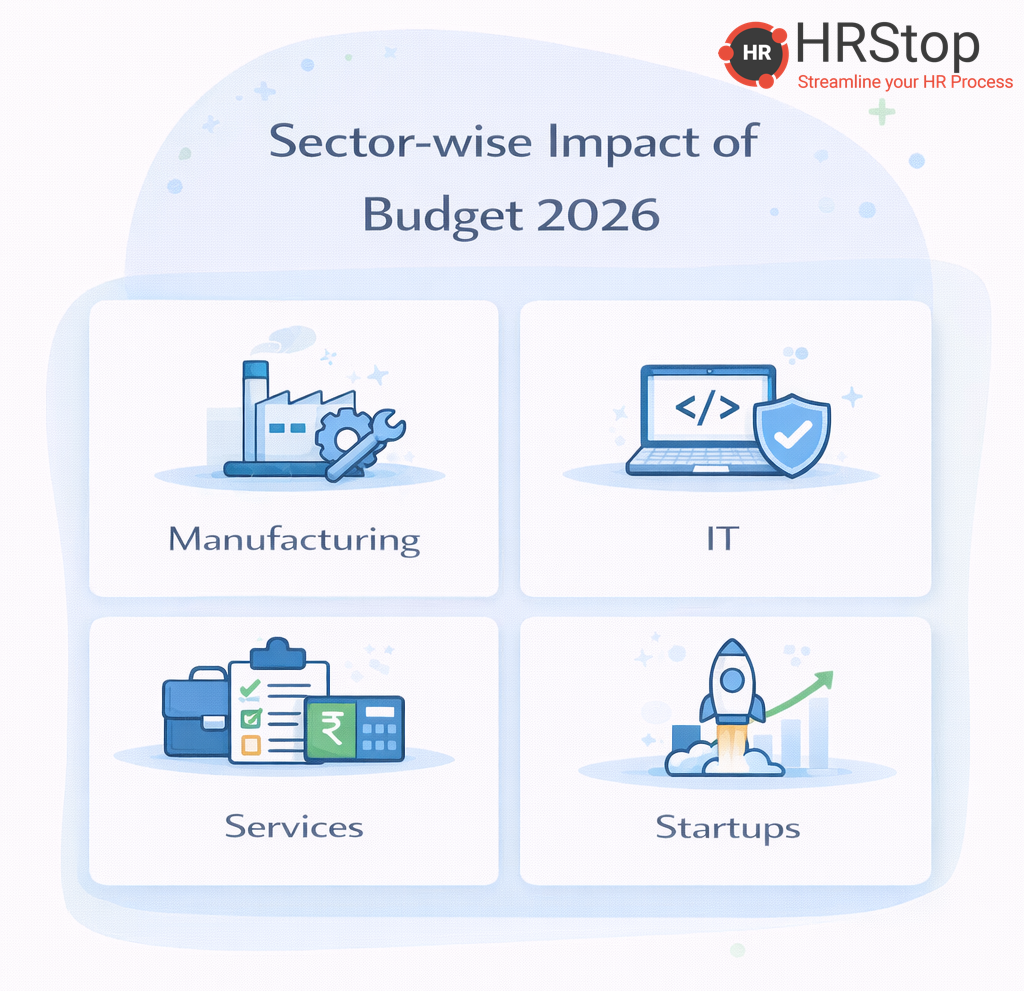
Manufacturing and Industrial Sector
Manufacturing organisations are directly impacted by workforce costs, compliance requirements, and operational efficiency. Budget 2026 reinforces the importance of structured payroll processes and accurate statutory compliance, especially for organisations with large shop-floor workforces.
Employers in this sector should focus on payroll accuracy, workforce documentation, and audit readiness.
IT and Technology Services
The IT and technology sector continues to operate with a highly skilled and dynamic workforce. Budget 2026 signals long-term support for digital growth, making workforce planning and talent retention critical.
HR teams in this sector should focus on flexible workforce models, digital HR systems, and scalable compliance processes.
Services and Consulting
Service-driven businesses rely heavily on human capital. Budget 2026 impacts these organisations through payroll compliance, tax implementation, and workforce cost planning.
Clear payroll structures and transparent employee communication are especially important in this sector.
Startups and Emerging Businesses
Startups and early-stage businesses are often resource-constrained. Budget 2026 highlights the importance of adopting digital-first payroll and compliance systems early to avoid future complexity as the organisation scales.
For broader policy context, refer to Union Budget 2026 Overview.
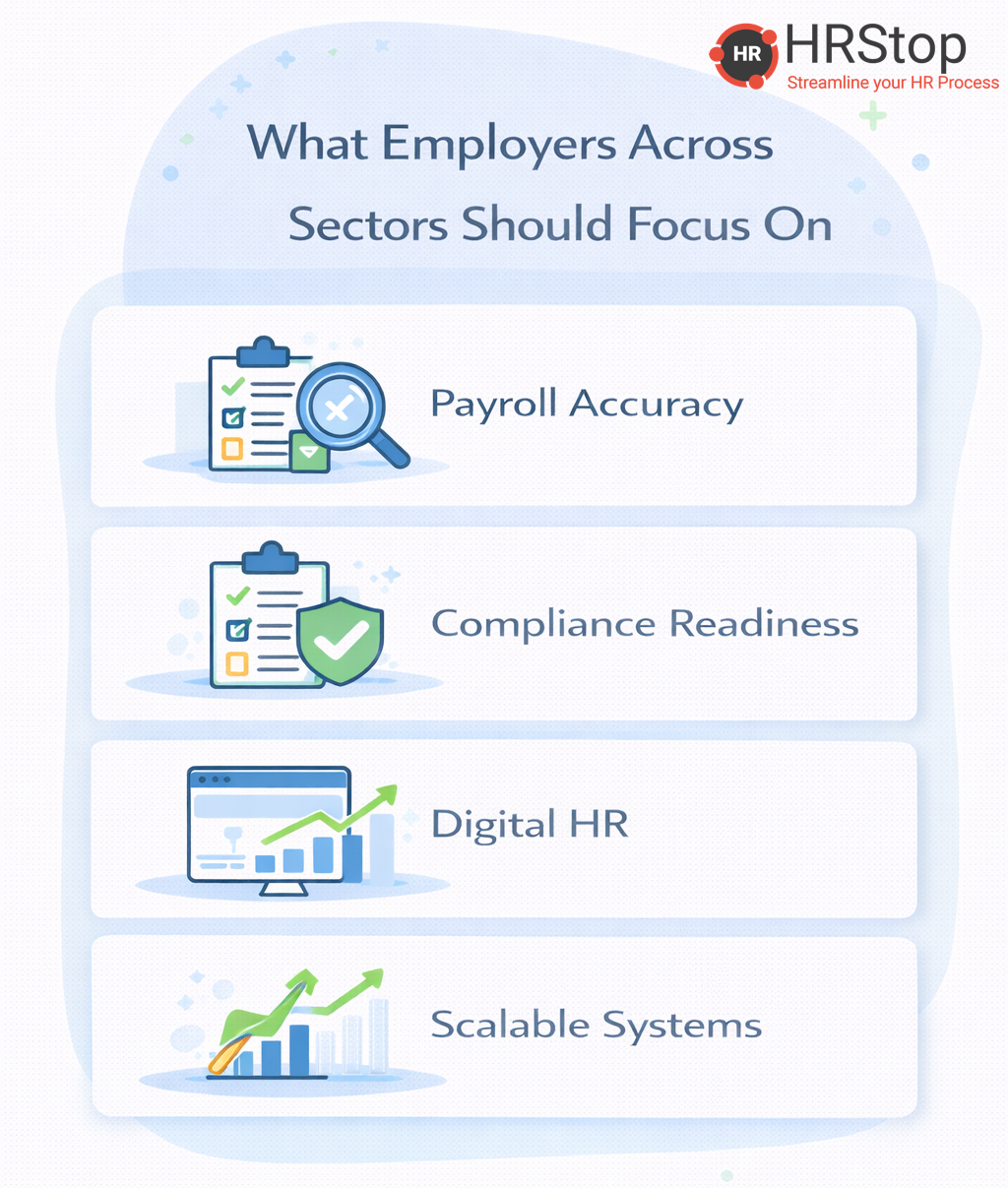
What Employers Across Sectors Should Focus On
- Ensure payroll systems reflect updated tax and compliance rules
- Maintain accurate employee records and documentation
- Prepare for digital audits and reporting
- Align HR, payroll, and finance teams
- Adopt scalable HR and payroll technology
Why a Sector-aware HR Strategy Matters
Budget 2026 reinforces that there is no one-size-fits-all approach to workforce and compliance management. Employers that align HR strategy with sector-specific realities are better positioned to manage cost, compliance, and employee expectations.
A sector-aware approach enables organisations to stay agile while remaining compliant.
How HRStop Supports Businesses Across Sectors
HRStop supports organisations across industries with payroll, compliance, and workforce management solutions that adapt to different business models. With automation and centralised reporting, HRStop helps businesses stay compliant while scaling confidently.
Conclusion
Budget 2026 impacts industries in different ways, but the common thread is the growing importance of accurate payroll, digital compliance, and future-ready HR systems. Organisations that proactively align their processes with sector realities will be better positioned for sustainable growth.
🚀 Is your organisation prepared to manage Budget 2026 changes in a sector-specific way?Request a Sector-specific HR and Payroll Readiness Check with HRStop
Frequently Asked Questions
Does Budget 2026 impact all sectors equally
No. The impact varies based on workforce size, payroll complexity, and compliance requirements unique to each sector.
Which sectors are most sensitive to payroll and compliance changes
Sectors with large or distributed workforces, such as manufacturing and services, are typically more sensitive to payroll and compliance accuracy.
Do startups need to worry about compliance at an early stage
Yes. Early adoption of structured payroll and compliance systems reduces long-term risk and complexity as startups scale.
How can organisations manage sector-specific compliance effectively
Using flexible HR and payroll systems that adapt to different workforce models helps manage sector-specific compliance needs.
What role does HR technology play across sectors
HR technology enables consistency, scalability, and visibility across payroll and compliance processes, regardless of industry.
Rashmi Agarwal
Wednesday, February 04, 2026
Share post:
Become part of our team
- Full Stack Developer
- Business Development Executive
- Technical Content Writer
- HR Business Partner
- Customer Happiness Executive
- Marketing Executive
One stop solution for all
Hire to Retire needs
HRStop is a complete Hire to Retire HR platform that accelerates the success of your business processes.