
DPDP Act Compliance for HR and Payroll
India’s Digital Personal Data Protection Act is now strictly enforced. HR and payroll teams that fail to comply face heavy penalties and loss of employee trust.
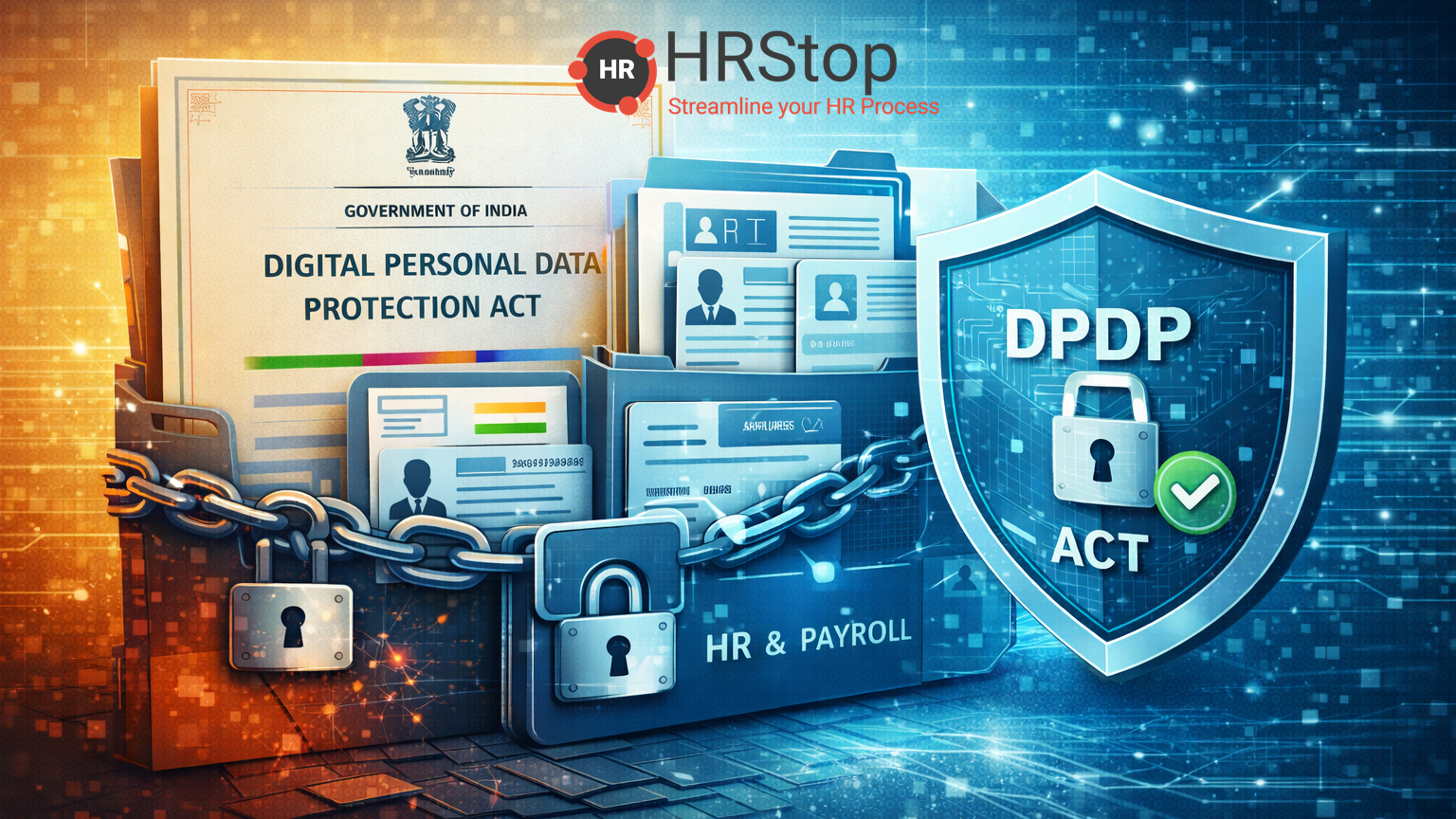
The Serious Impact of DPDP Act on HR Operations
The DPDP Act has completely changed how organisations must handle employee data. Every piece of personal information processed in payroll, attendance, performance reviews, or recruitment now falls under strict regulatory scrutiny.
CHROs, payroll heads, and business leaders can no longer treat compliance as a background task. Non-compliance risks massive fines, legal action, and serious damage to employer brand.
Key Requirements Every HR Leader Must Know
The DPDP Act places clear and non-negotiable obligations on organisations:
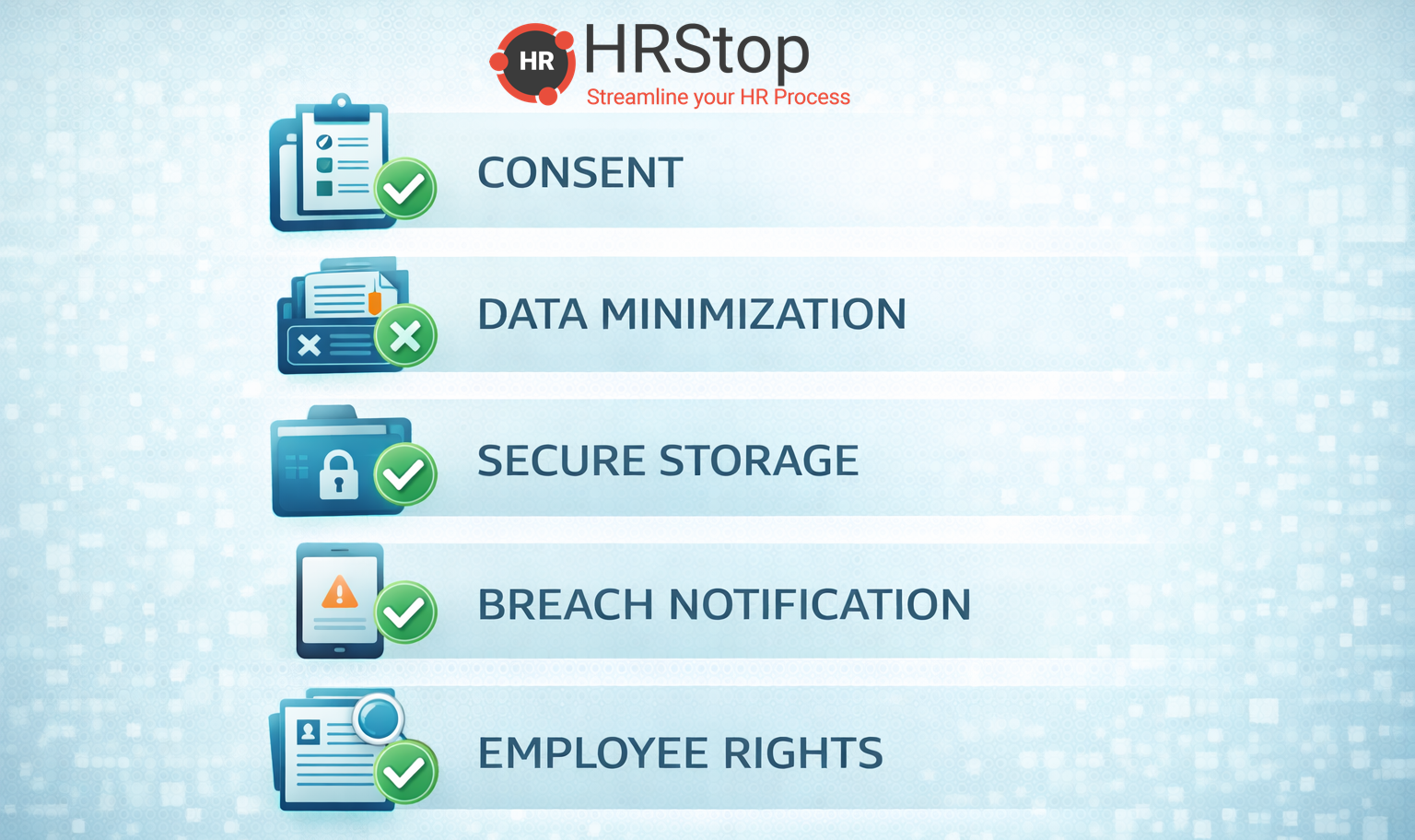
- Obtain explicit consent before collecting or processing employee data
- Practice strict data minimization - collect only what is absolutely necessary
- Ensure secure storage and processing of all personal information
- Implement proper breach notification within tight timelines
- Maintain detailed records of data processing activities
- Respect employee rights to access, correction, and erasure of their data
Significant Data Fiduciaries face even stricter accountability and higher penalties for violations.
Common Compliance Pitfalls in Payroll and HR
Many organisations still make dangerous mistakes that expose them to risk:
- Storing excessive employee data beyond required periods
- Using outdated payroll systems with poor consent management
- Failing to map data flows across multiple HR tools and government portals
- Weak access controls allowing unauthorised viewing of sensitive records
- Delayed or missing breach notification processes
These gaps become extremely costly when regulators start enforcing the DPDP Act more aggressively in 2026.
How Modern HRMS Simplifies DPDP Act Compliance
A robust HRMS must actively help organisations meet DPDP Act requirements instead of creating more work. Look for platforms that offer:
- Built-in consent management workflows
- Automated data minimization and retention policies
- Real-time audit trails for every data access
- Secure integration with payroll and government systems
- Automated breach detection and notification alerts
At HRStop, we have designed our platform to make DPDP Act compliance automatic and effortless while keeping HR operations fast and accurate.
Immediate Actions for HR and Business Leaders
Do not wait for a regulatory notice. Take these steps immediately:
- Conduct a complete audit of all employee data collected and stored across systems
- Map every data flow from recruitment to exit processes
- Update consent forms and privacy notices for all employees
- Implement strict access controls and role-based permissions
- Choose or upgrade to an HRMS that is built for DPDP Act compliance from day one
Leaders who delay these actions are playing with fire in 2026.
DPDP Act compliance is not a one-time project. It must become a continuous part of your HR and payroll operations. Request a Free HR Process Audit
Key Takeaways for CHROs and Business Leaders
- The DPDP Act demands strict consent, data minimization, and security for all employee data.
- Payroll and HR systems are high-risk areas under the new regulation.
- Manual processes and legacy software increase compliance risk significantly.
- A modern, compliant HRMS turns DPDP Act requirements into an automated strength rather than a burden.
FAQs
Does the DPDP Act apply to all employee data in HR and payroll? Yes. Any personal data of employees, candidates, or ex-employees must comply with DPDP Act rules.
What is the biggest compliance risk in payroll processing? Storing excessive data or failing to implement proper consent and breach notification mechanisms.
How quickly must organisations notify a data breach under DPDP Act? Organisations must notify the Data Protection Board and affected individuals as soon as possible, with strict timelines defined in the rules.
Can small and mid-sized companies meet DPDP Act requirements? Yes, but they need the right tools. A compliant HRMS significantly reduces the effort and risk.
What should leaders ask their HRMS vendor about DPDP Act? Ask about built-in consent management, data retention policies, audit trails, breach alerts, and how the platform ensures data minimization.
How does HRStop help with DPDP Act compliance? HRStop automates consent tracking, data minimization, audit logging, and secure processing so organisations stay compliant without manual headaches.
Related Articles
For more insights on protecting employee data:
- Why Employee Data Is Cyber Target in AI Era
- AI in HR: Innovation vs Data Privacy 2026
- Zero Trust Security for Modern HRMS
HRStop delivers secure and fully compliant HR and payroll systems that help organisations meet DPDP Act requirements while reducing manual work. Request a Free HR Process Audit
#AI security
#HR cybersecurity
#employee data protection
#DPDP Act
#HRMS security
#Claude Mythos
#Zero Trust HR
Rashmi Agarwal
Monday, April 20, 2026
Share post:
Become part of our team
- Full Stack Developer
- Business Development Executive
- Technical Content Writer
- HR Business Partner
- Customer Happiness Executive
- Marketing Executive
One stop solution for all
Hire to Retire needs
HRStop is a complete Hire to Retire HR platform that accelerates the success of your business processes.