
Working Hours Leave and Overtime Rules
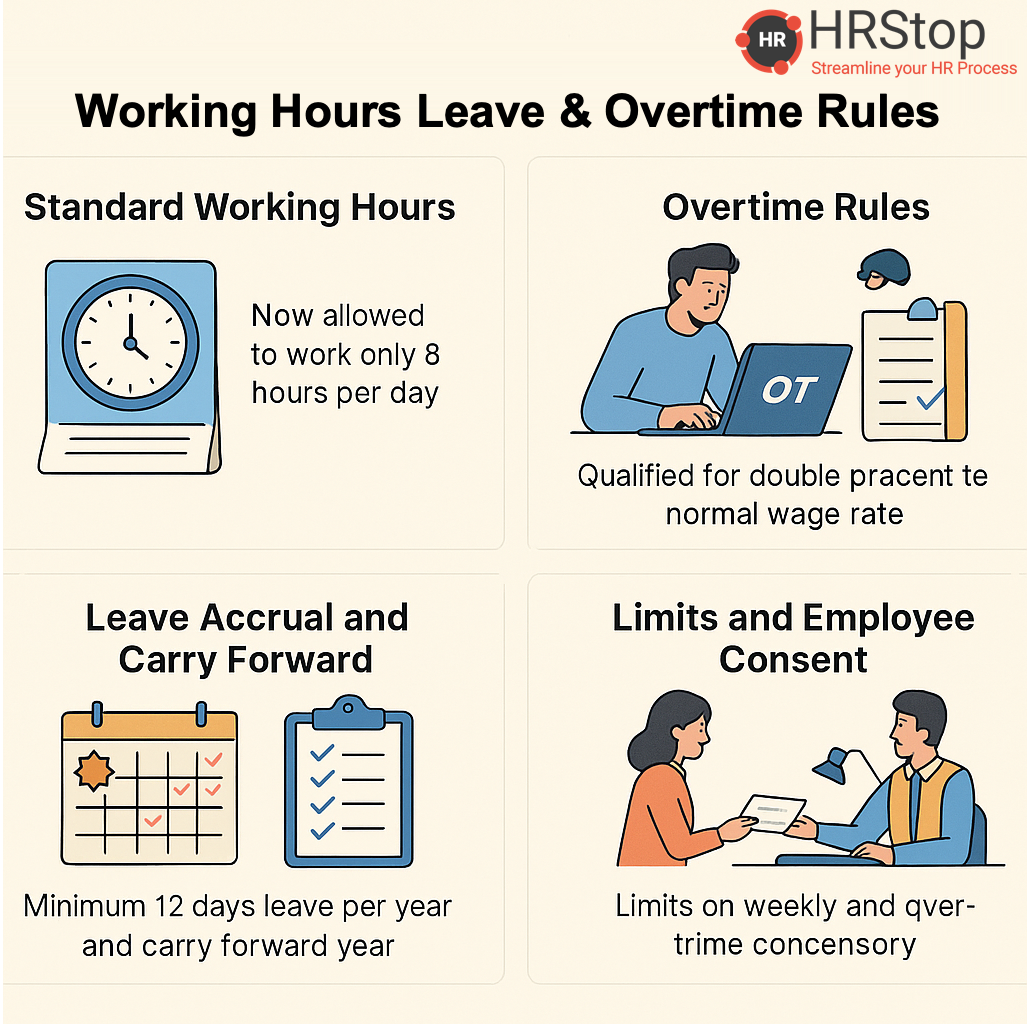
The Labour Codes 2025 bring clarity and uniformity to working hours leave entitlements and overtime rules across industries. These changes redefine daily and weekly limits introduce consent based overtime and standardise weekly rest and leave requirements. This article explains the new rules in detail so HR teams can update policies and payroll compliance smoothly.
Introduction
The Occupational Safety and Health Code and the Wage Code together create a uniform framework governing working hours weekly rest overtime leave and working conditions. These rules apply across factories offices IT companies warehouses shops and all notified establishments. With the Labour Codes 2025 coming into effect HR teams must update their employee handbooks shift structures attendance systems overtime approval flows and leave policies.
The new rules standardise daily limits weekly limits consent based overtime wages for overtime and guidelines for women working during late hours. This article simplifies every part of the working hours and leave framework to help HR teams implement the Code accurately.
Key Changes at a Glance
- Daily limit of eight hours
- Weekly limit of forty eight hours
- Overtime at twice the normal wage
- Consent required for overtime
- Spread over limits improved
- Weekly rest mandatory
- Earned leave accumulation updated under new framework
- Uniform rules across establishments
Detailed Explanation of Working Hours Leave and Overtime Rules
The sections below explain the new rules in a structured manner so HR teams can implement them confidently.
1. Daily and Weekly Working Hour Limits
The Labour Codes specify:
- Maximum eight hours per day
- Maximum forty eight hours per week
Any additional work beyond these limits constitutes overtime.
To understand linked OSH requirements you may also read Occupational Safety and Health Code Explained.
2. Overtime at Double Wages
Overtime must be paid at twice the normal rate of wages.
This applies to:
- Work beyond eight hours a day
- Work beyond forty eight hours a week
- Work done on weekly rest days when permitted
The new wage definition also affects overtime calculations. For clarity you may read New Wage Structure and the Fifty Percent Rule.
3. Consent Based Overtime
Employees cannot be forced to work overtime. Written or digital consent is required.
This helps ensure worker well being and prevents excessive work hours.
4. Spread Over and Rest Intervals
The spread over rule defines the total time from the beginning to end of an employee’s workday including breaks.
The Code provides a standardised spread over framework and ensures minimum rest intervals between work periods.
5. Weekly Rest Requirements
Every employee must receive a weekly rest day after fulfilling the minimum number of working hours as prescribed.
Work on weekly rest days requires compensatory leave or overtime wages.
6. Leave Entitlements Under the New Framework
Earned leave calculation and carry forward rules apply uniformly under the Code.
Short leaves casual leaves and special leaves continue based on organisation policy but must not conflict with statutory rights.
7. Working Hours for Women Employees
Women can work between 7 PM and 6 AM subject to:
- Written consent
- Safe transportation
- Adequate security
- No discrimination in shift allocation
For detailed rules see Women Night Shift Safety Rules.
8. Impact on Employers and HR Teams
HR teams must:
- Redesign shift structures
- Configure overtime workflows
- Update leave policies
- Ensure consent based overtime
- Prepare digital attendance and working hour records
For compliance ties with OSH requirements and workplace safety you may also read Inter State Migrant Worker Provisions.
Working Hours and Overtime
| Category | Earlier Provisions | New Provisions Under Labour Codes 2025 |
|---|---|---|
| Daily Hours | Varies by law and industry | Eight hours per day |
| Weekly Hours | Not uniform | Forty eight hours per week |
| Overtime Rate | Mostly one point five times | Twice the normal rate of wages |
| Consent for OT | Not always required | Mandatory written or digital consent |
| Work on Weekly Rest Day | Sector specific rules | Uniform rule with mandatory overtime or compensatory leave |
Leave and Working Conditions
| Category | Earlier Rules | New Labour Code Rules |
|---|---|---|
| Earned Leave Accumulation | Different across industries | Uniform across establishments |
| Spread Over | Varies by sector | Standardised under OSH Code |
| Women Working at Night | Heavily restricted | Allowed with consent and safety measures |
| Digital Attendance | Mostly manual | Mandatory digital records in notified establishments |
HR Checklist for Immediate Action for Working Hours and Overtime Compliance
- Update working hour and shift policies
- Ensure digital consent flow for overtime
- Configure attendance systems for new limits
- Update leave policies to align with the Code
- Review weekly rest and compensatory off processes
- Train managers on overtime rules
- Communicate changes to all employees
- Align wage structure with overtime calculations
Explore HRStop Today
HRStop helps organisations implement new working hour rules with automated overtime workflows digital attendance records weekly rest tracking and updated leave management that aligns with Labour Codes 2025.
How HRStop Helps
- Overtime calculation at double wage rates
- Consent workflows for extra hours
- Digital attendance and shift tracking
- Leave and weekly rest compliance
- Multi location working hour dashboards
- Alerts for overtime policy breaches
Related Articles
- Occupational Safety and Health Code Explained
- Women Night Shift Safety Rules
- Inter State Migrant Worker Provisions
- New Wage Structure and the Fifty Percent Rule
- India’s New Labour Codes 2025 Overview
Conclusion
The Labour Codes 2025 create a more balanced and uniform working hour framework for all establishments. By standardising daily and weekly limits mandating consent based overtime and enforcing clear leave and weekly rest rules the Codes focus on worker well being and safer workplaces. HR teams must update policies attendance systems and approval workflows to stay fully compliant.
FAQs
What is the daily working hour limit under the new Codes
Eight hours per day.
How is overtime paid
At twice the normal rate of wages.
Is employee consent required for overtime
Yes written or digital consent is mandatory.
Are women allowed to work night shifts
Yes with consent and safety measures.
Is digital attendance required
Yes for notified establishments.
Rashmi Agarwal
Tuesday, November 25, 2025
Share post:
Become part of our team
- Full Stack Developer
- Business Development Executive
- Technical Content Writer
- HR Business Partner
- Customer Happiness Executive
- Marketing Executive
One stop solution for all
Hire to Retire needs
HRStop is a complete Hire to Retire HR platform that accelerates the success of your business processes.