
Zero Trust Security for Modern HRMS
Traditional perimeter security is no longer enough for HR systems in the age of advanced AI threats.
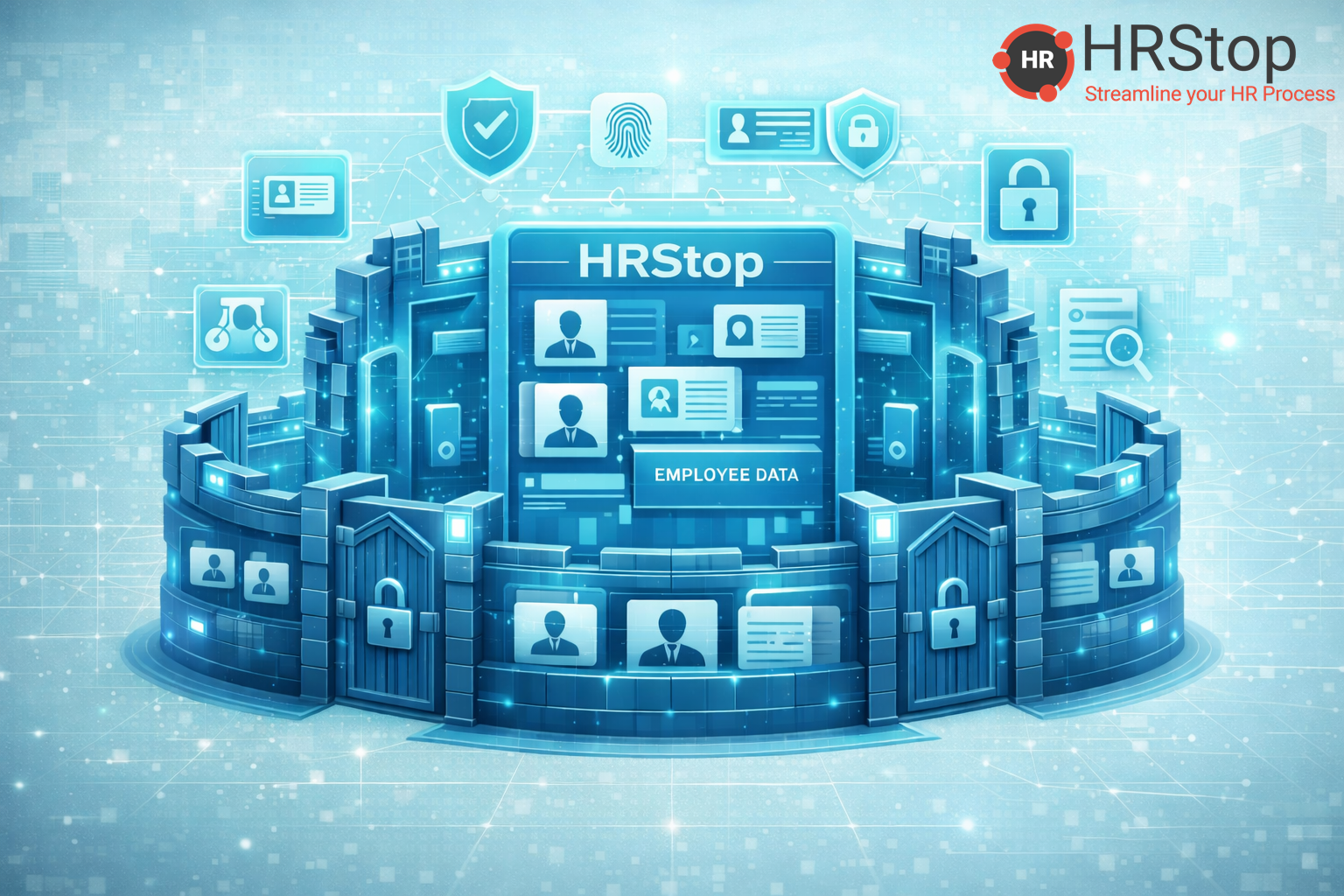
Understanding Zero Trust Security
Zero Trust is a modern security framework based on a simple principle: never trust, always verify. Unlike traditional security models that assume everything inside the corporate network is safe, Zero Trust treats every user, device, and application as potentially hostile - regardless of whether they are inside or outside the network.
In 2026, with frontier AI models like Claude Mythos capable of discovering hidden vulnerabilities in seconds, this approach has become essential for protecting sensitive HR data.
Why Traditional Security Falls Short in HR
Most legacy HR software still relies on outdated “castle-and-moat” security - strong perimeter firewalls but weak internal controls. Once an attacker breaches the outer layer (through phishing, compromised credentials, or AI-generated exploits), they often gain broad access to employee records, payroll systems, and compliance data.
This model is particularly dangerous for HRMS because:
- HR systems integrate with multiple third-party tools (payroll gateways, government portals, attendance devices)
- Employees and managers access the system from various locations and devices
- The volume and sensitivity of data (personal, financial, and health information) is extremely high
In an era where AI can rapidly identify and exploit weak points, perimeter-based security leaves organisations vulnerable.
Core Principles of Zero Trust for HRMS
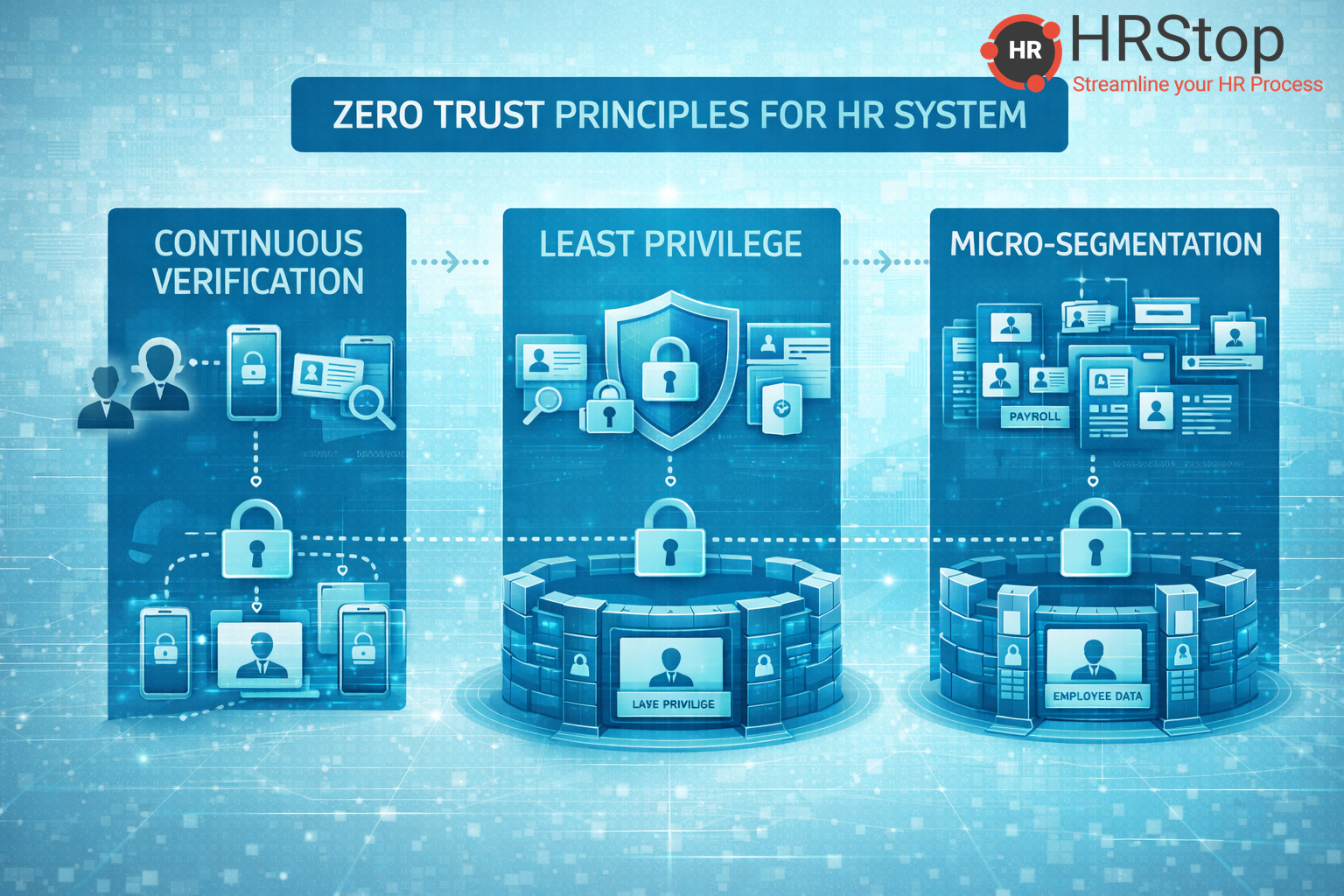
A Zero Trust approach for HR systems is built on three fundamental pillars:
- Continuous Verification: Every access request - whether from an HR manager, employee, or integrated system - is verified in real time based on identity, device health, location, and behaviour.
- Least Privilege Access: Users and applications get only the minimum permissions needed to perform their task, and these permissions are dynamically adjusted.
- Micro-Segmentation: The HR system is divided into small, isolated zones so that a breach in one area (e.g., recruitment module) does not expose the entire payroll or performance database.
These principles significantly reduce the blast radius of any potential attack.
Relevance in the Age of Advanced AI Threats
Models like Claude Mythos have shown that AI can autonomously find zero-day vulnerabilities and chain exploits across systems. Zero Trust becomes a critical defence layer because it assumes breaches will happen and focuses on limiting damage while maintaining continuous monitoring.
For CHROs, IT leaders, and founders running mid-sized organisations, implementing Zero Trust in HR is no longer a “nice-to-have” - it is a strategic necessity to protect employee trust and meet DPDP Act compliance requirements.
How HRStop Implements Zero Trust
At HRStop, we have built Zero Trust principles directly into our platform architecture. This includes real-time access verification, granular role-based controls, comprehensive audit logging, and secure micro-segmentation of sensitive modules like payroll and employee records.
This approach helps organisations stay resilient against evolving AI-driven threats while keeping HR operations smooth and user-friendly.
Actionable Steps for Leaders
Business leaders and HR heads should take these practical steps:
- Assess your current HRMS against Zero Trust principles
- Map all data flows and integration points in your HR tech stack
- Prioritise vendors that demonstrate continuous verification and micro-segmentation capabilities
- Develop a phased Zero Trust implementation roadmap for HR systems
- Combine technical controls with employee awareness training on secure practices
In 2026, assuming your HR system is safe just because it sits behind a firewall is one of the biggest security mistakes leaders can make. Request a Free HR Process Audit
Leaders who proactively adopt Zero Trust in their HR technology are not only protecting sensitive employee data - they are future-proofing their organisation against the next wave of AI-powered threats.
Key Takeaways for HR and Business Leaders
- Traditional perimeter security is insufficient against today’s AI-enhanced cyber threats.
- Zero Trust operates on “never trust, always verify,” dramatically reducing risk in HR systems.
- Implementing Zero Trust protects employee data, supports DPDP Act compliance, and limits breach impact.
- Modern HRMS platforms with built-in Zero Trust architecture provide the strongest foundation for secure people operations.
FAQs
What is Zero Trust Security in simple terms? Zero Trust means never automatically trusting any user, device, or system - every access request must be continuously verified.
Why is Zero Trust particularly important for HRMS? HR systems contain highly sensitive personal and financial data. A breach here can cause regulatory penalties, loss of trust, and long-term reputational damage.
Does Zero Trust slow down HR operations? When properly implemented, Zero Trust improves security without significantly impacting user experience through intelligent, context-aware verification.
How does Zero Trust help with DPDP Act compliance? It enforces data minimization, strict access controls, and detailed audit trails - all key requirements under the DPDP Act.
Can mid-sized companies afford Zero Trust in HR? Yes. Many modern HRMS platforms like HRStop offer Zero Trust capabilities as part of their core architecture without requiring heavy additional investment.
What should leaders ask HRMS vendors about Zero Trust? Ask about continuous verification, micro-segmentation, least privilege enforcement, and how the platform handles real-time threat detection.
Related Articles
For deeper insights, explore:
- Claude Mythos & HR Cybersecurity 2026 – Understanding frontier AI threats
- Why Employee Data Is Cyber Target in AI Era – Why HR data is so attractive to attackers
- AI in HR: Innovation vs Data Privacy 2026 – Balancing AI benefits with privacy
HRStop helps organisations build secure, compliant HR systems that support business growth while protecting what matters most - employee data. Request a Free HR Process Audit
#AI security
#HR cybersecurity
#employee data protection
#DPDP Act
#HRMS security
#Claude Mythos
#Zero Trust HR
Rashmi Agarwal
Monday, April 20, 2026
Share post:
Become part of our team
- Full Stack Developer
- Business Development Executive
- Technical Content Writer
- HR Business Partner
- Customer Happiness Executive
- Marketing Executive
One stop solution for all
Hire to Retire needs
HRStop is a complete Hire to Retire HR platform that accelerates the success of your business processes.