AI in HR: Innovation vs Data Privacy 2026
AI is transforming HR functions, but rapid adoption brings serious privacy and compliance risks that every organisation must manage.
Overview of AI Adoption in HR
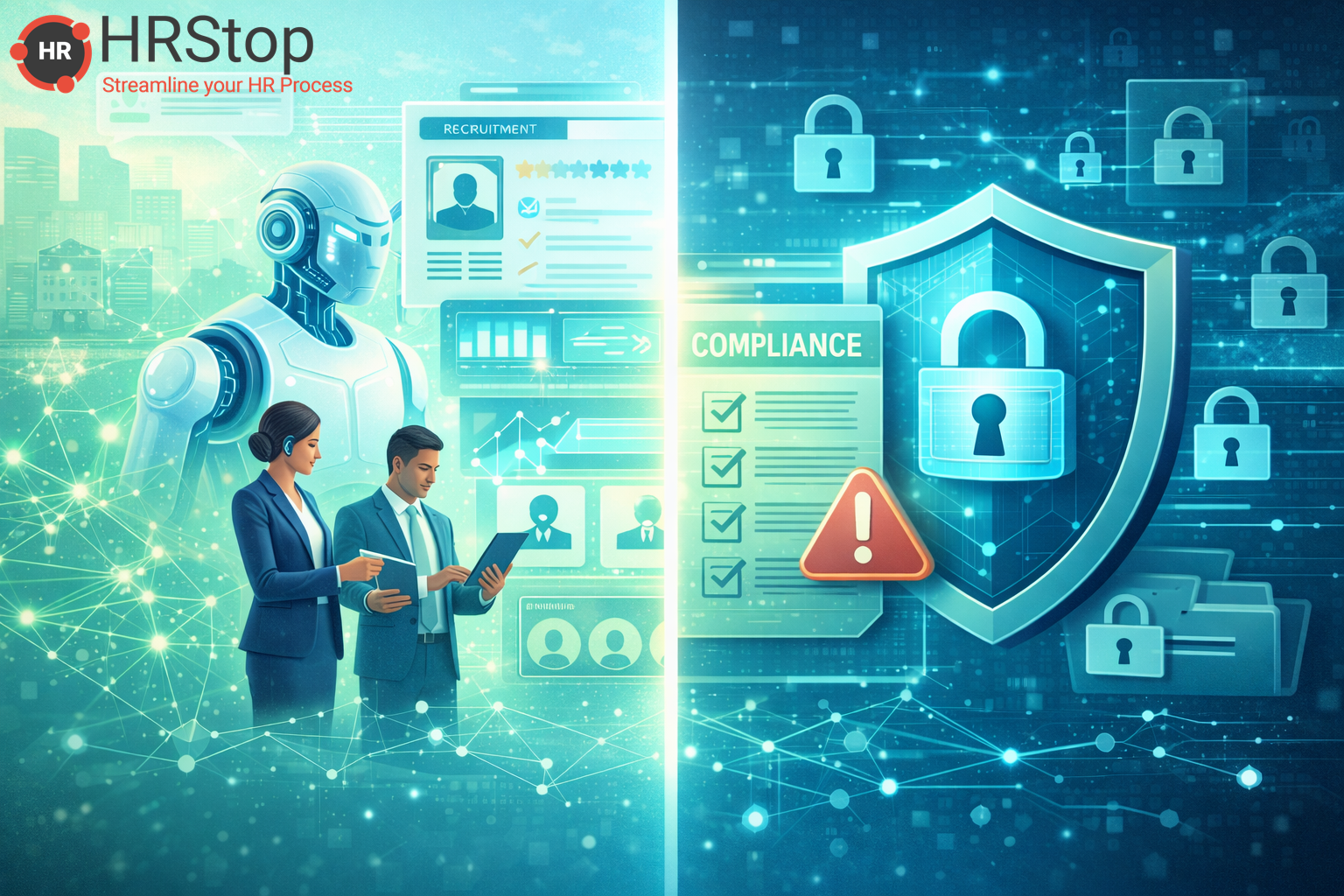
Artificial Intelligence is rapidly changing how HR teams operate in 2026. From intelligent resume screening and chat-based employee support to predictive performance analytics and automated payroll processing, AI tools are delivering significant efficiency gains.
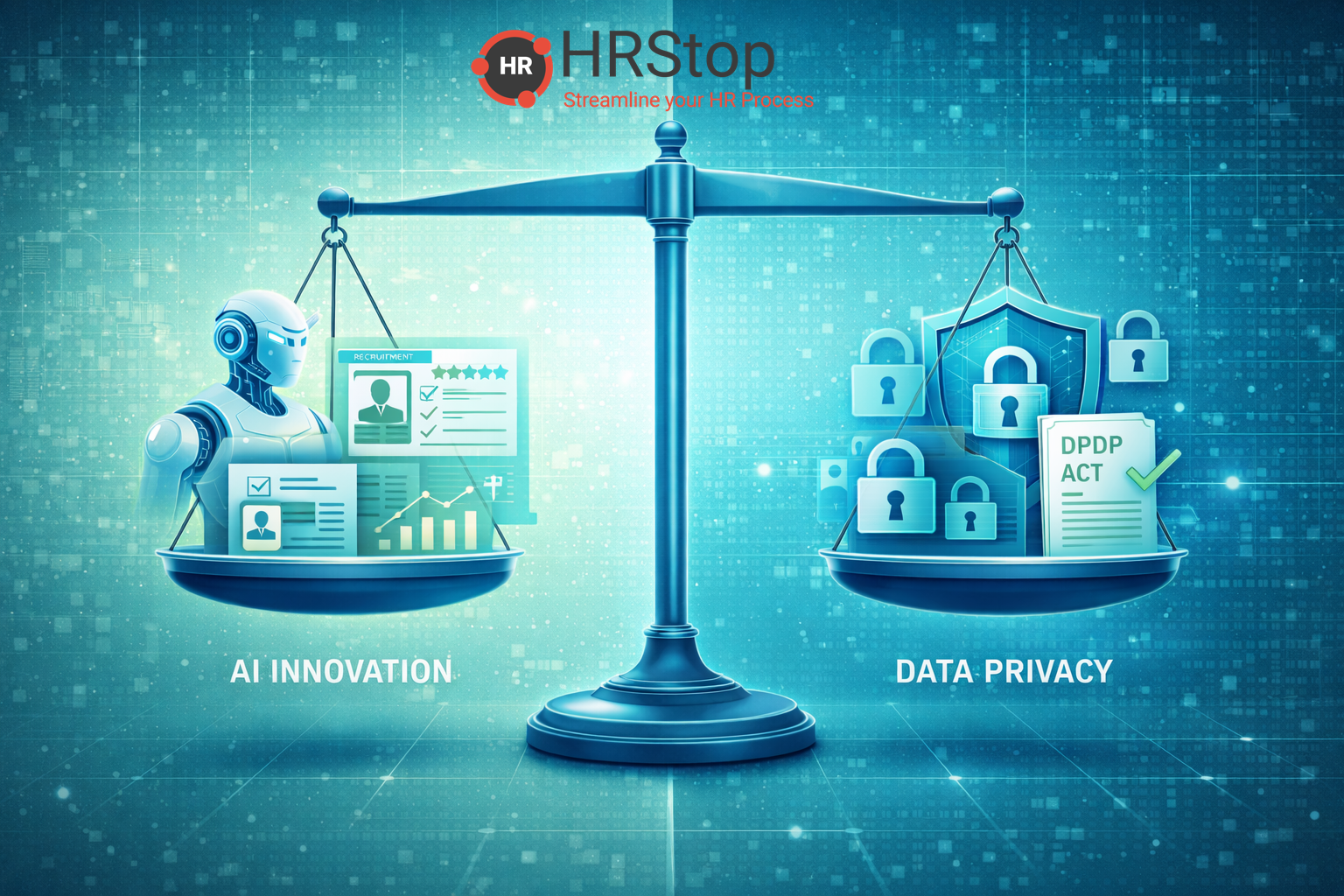
However, as organisations increasingly integrate AI into HR workflows, the volume of employee data being processed has grown dramatically. This creates a critical need to balance innovation with robust data privacy protections.
Benefits of AI in HR Functions
AI is bringing clear advantages across key HR areas:
- Faster and more accurate candidate shortlisting in recruitment
- Personalised learning and development recommendations
- Real-time employee engagement and sentiment analysis
- Automated compliance checks in payroll and attendance
- Predictive insights for workforce planning and retention
These capabilities help HR teams reduce manual effort and make more data-driven decisions.
Key Privacy and Compliance Risks
Despite its benefits, AI adoption in HR introduces several serious risks:
- Unintentional bias in AI-driven recruitment and performance tools
- Excessive collection and storage of employee data beyond necessary requirements
- Potential data leakage through third-party AI integrations
- Lack of transparency in how AI makes decisions affecting employees
- Difficulty in explaining AI-generated outcomes during audits or grievances
Under India’s Digital Personal Data Protection (DPDP) Act, organisations must ensure lawful processing, consent management, data minimization, and secure storage of personal data. Failure to do so can result in significant penalties.
Best Practices for Responsible AI in HR
To harness AI benefits while minimising risks, HR leaders should adopt the following practices:
- Conduct privacy impact assessments before implementing new AI tools
- Use only necessary employee data for AI processing (data minimization)
- Maintain human oversight and explainability for critical decisions
- Choose AI vendors with strong security certifications and transparent practices
- Implement clear consent mechanisms and employee communication policies
Modern HRMS platforms play a vital role by providing secure, compliant foundations for AI integration.
At HRStop, we design our platform to support responsible AI usage while maintaining full DPDP Act compliance and strong data protection.
Actionable Steps for HR Leaders
Here are practical steps to balance innovation with privacy:
- Audit all AI tools currently used in your HR processes
- Review data flows and ensure compliance with DPDP Act principles
- Establish an internal AI governance policy for HR
- Train HR and IT teams on responsible AI and data privacy
- Evaluate HRMS vendors on their built-in privacy and security features
Responsible AI adoption in HR is not just about technology - it is about protecting employee trust while driving efficiency. Request a Free HR Process Audit
Key Takeaways for HR Leaders
- AI offers powerful efficiency gains across recruitment, performance, and workforce planning.
- Rapid AI adoption increases privacy risks and DPDP Act compliance obligations.
- Data minimization, transparency, and human oversight are essential for responsible AI use.
- A secure and compliant HRMS provides the safest foundation for AI integration in HR.
FAQs
How is AI changing HR functions in 2026? AI is automating resume screening, employee support, performance analysis, and payroll compliance checks, significantly improving speed and accuracy.
What are the main privacy risks of using AI in HR? Key risks include data over-collection, bias in decision-making, lack of transparency, and potential leaks through third-party AI tools.
Does the DPDP Act apply to AI tools used in HR? Yes. Any processing of personal data through AI must follow DPDP Act principles of consent, purpose limitation, data minimization, and security.
Should HR teams stop using AI due to privacy concerns? No. Instead, organisations should adopt responsible AI practices with proper governance, oversight, and secure platforms.
What should we look for in an HRMS when using AI? Look for built-in privacy controls, audit trails, data encryption, consent management features, and clear compliance with DPDP Act.
How can HRStop support responsible AI adoption? HRStop provides a secure, compliant platform that enables safe AI integration while protecting employee data and meeting regulatory requirements.
Related Articles
- Claude Mythos & HR Cybersecurity 2026
- Why Employee Data Is Cyber Target in AI Era
- Zero Trust Security for Modern HRMS
- DPDP Act Compliance for HR & Payroll
HRStop supports employers with secure and structured tracking of employee data while enabling responsible AI usage in HR processes.
#AI security
#HR cybersecurity
#employee data protection
#DPDP Act
#HRMS security
#Claude Mythos
#Zero Trust HR
Rashmi Agarwal
Monday, April 20, 2026
Share post:
Become part of our team
- Full Stack Developer
- Business Development Executive
- Technical Content Writer
- HR Business Partner
- Customer Happiness Executive
- Marketing Executive
One stop solution for all
Hire to Retire needs
HRStop is a complete Hire to Retire HR platform that accelerates the success of your business processes.